Werxbooks
AI is very good at unearthing quantitative data. It isn’t good at establishing meaning.
A Werxbook is a way of introducing evidence based methods into the AI your team already uses, right from the outset. It pushes the AI to be selective with its sources and to interrogate every result before presenting its conclusions. It shows where the evidence stands, and logs what it searched, what it opened, and what it pushed aside.
Introduction, 3 minutes 20 seconds. Captions available.
Why it matters
Data has no meaning without its provenance.
Strip away who took the measurement, under what conditions, against what baseline, and how long ago, and a figure can travel well beyond any reasonable boundary. The consequences often surface when it’s too late: after the pilot is approved, when an evaluation comes in well below what you planned for, or when a regulator asks for the basis of a savings claim and finds out you cited a planning assumption set eleven years ago.
By then the number is in the budget and the filing, and the analyst owns it.
What the tests found
On their own, the AIs make mistakes an analyst would not catch.
01
It repeats the number it sees most often
Whether or not anyone independent ever measured it, so an old pilot or a vendor’s own study can end up as the benchmark.
02
It treats a vendor study and an independent evaluation as equal
Vendor savings claims get called plausible, with no independent result behind them.
03
Old studies count
It leans on studies more than ten years old, from early pilots that no longer look like the market.
04
It decides for you
It drifts into telling the utility what to do. In one test, Copilot pulled a file from my own account into a brief, without being asked.
Test runs
The same question, with and without the Werxbook
Each test asks Copilot, ChatGPT and Claude the same question twice: once on their own, and once with the Technology Scan Werxbook loaded.
Smart thermostats
Our plan assumes about 8 percent heating savings, and our evaluator came in much lower. Is the assumption out of line, and what do we tell the regulator?
“So every number that each one of those AIs gave was for fuel I’d never named.”On the runs without the Werxbook
Transcritical CO₂ refrigeration
A vendor claims 10 to 15 percent savings, and a pilot store is doing better. ChatGPT with Think turned on, 28 October 2026.
Without the Werxbook
“Proposed decision: Authorize a measured pilot expansion…”
“This is the strongest recent U.S. retail example for both goals.”
It made the decision for the utility, treated an industry case study as the best evidence without asking who paid for it, and called a study from 2013 and 2014 “the important counterexample.”
With the Werxbook
“…no opened independent measurement that directly verifies the vendor’s conversion claim against a stated baseline and denominator.”
“Independence not checked; vendor involvement disclosed.”
“This scan reveals where the evidence stands. The decision belongs to the utility.”
Quoted from the outputs. The full runs are available on request.
Next test runs
Recording
Transcritical CO₂ refrigeration
Copilot, ChatGPT and Claude, with and without the Werxbook.
Coming
Next technology
More tests in efficiency and demand side measures.
Your question
Have a measure in mind?
See it run on a question your team is working on.
How it works
With a Werxbook loaded, the AI asks the questions I’d ask about every result.
- Who measured it?
- Who paid for it?
- Measured, assumed, or claimed?
- Is it recent enough?
- Does it apply to your situation?
Reveal, don’t recommend
The scan shows where the evidence stands and what it would take to demonstrate a claim. It doesn’t make the decision for you.
Who measured it, and who paid
Every result is labeled independent, sponsored, assumed, or claimed. Vendor results and your own are shown, never passed off as proof.
Nothing older than ten years
Results measured more than ten years ago are listed and set aside, so early pilots don’t stand in for today’s market.
A log you can show
Every scan ends with the searches run, the sources opened, what was left out, and the checks the AI ran on its own draft. If someone asks where a result came from and what it means, you can show them.
The scan reveals where the evidence stands.
The decision always belongs to you.
What you get
The Technology Scan Werxbook
For emerging technology teams working on efficiency and demand side measures, and emerging technologies in that domain.
- A core file you paste into your AI, and a reference file you attach
- Dated editions, each with an expiry date
- Tested on Microsoft Copilot, ChatGPT and Claude
- Loading instructions for each, including when to turn on Think or Think deeper
- A summary your analysts can forward, with the scan log attached
- Your questions and data stay in your AI. PerchWerx never sees them.

Who’s behind it
Carol L. Stimmel, PhD
PerchWerx Consulting, Richmond, Virginia
- Former VP of New Ventures at Gartner
- Led the smart grid research team at Pike Research
- Many years of screening emerging technologies for utilities
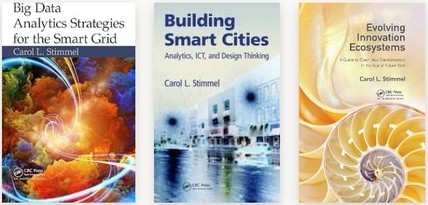
- Author of the books below
Pricing
Two ways to license
Individual
For an analyst, or a small municipal utility or cooperative.
Pay what you want.
Organization
Unlimited use across your organization, for one kit, any three kits, or a full shelf.
Personalized demo
See it run on a question your team is working on.
Send me a question your team is working on, and the AI you use. I’ll run it with the Technology Scan Werxbook and walk you through what it found.
- Tell me the questionA technology, a claim you’ve been handed, or a number you need to stand behind.
- I run the scanOn Copilot, ChatGPT or Claude, with and without the Werxbook.
- We go through it togetherWhere the evidence stands, what it would take to prove the claim, and the scan log.